




Golf Lovers Day is the perfect excuse to celebrate one of our favourite sports, and take a closer look at what happens to your body over 18 holes.

If you play golf, you probably know the feeling. You arrive at the course, after spending 20–30 minutes sitting in the car, grab your clubs and head straight to the first tee. You take a few practice swings and wonder why your hips, back and shoulders feel so stiff. Then, somewhere around hole 4 or 5, everything changes. “There it is. Now I’m warmed up.” Your swing feels smoother, your rotation improves and you’re finally finding your rhythm. Fast-forward to hole 16, and suddenly you’re feeling it again. Your legs are tired, your balance isn’t quite as sharp, your swing feels different and maybe that familiar back or hip ache has made an appearance.
So why can your body feel so different on hole 1, hole 9 and hole 18?
Let’s take a look at why your golf swing can feel stiff and sluggish on the first tee, smooth and effortless by hole 6, and tired again by hole 17! Plus, we’ll share some simple tips to help your body stay ready from the first tee to the final green.
⛳ HOLES 1–3:
“Why Am I So Stiff?”

For many golfers, the first few holes are the hardest. Your body has gone from sitting in a car → standing on a tee box → producing a powerful rotational movement in a very short period of time. It’s not surprising that the first few swings may not feel like your best. Golf requires substantial rotation through the hips and trunk. If you have spent the previous 30 minutes sitting in a car, your body may simply not feel ready to move through those positions at full speed.
You may notice:
- Your backswing feels restricted
- Your follow-through feels shorter
- Your hips feel tight
- Your back feels stiff
- Your first few shots don’t feel like your normal swing
The goal isn’t necessarily to become more flexible. The goal is to prepare the movements you’re about to ask your body to perform.
🏌️ Try This Before Your Round
Instead of spending the first three holes trying to “warm up,” give yourself 5–10 minutes before you tee off. Start with a simple walk, park a little farther away from the clubhouse or pro shop and use those extra few minutes to get moving. Walking helps gradually increase your body temperature and gets your muscles and joints moving before you start swinging.
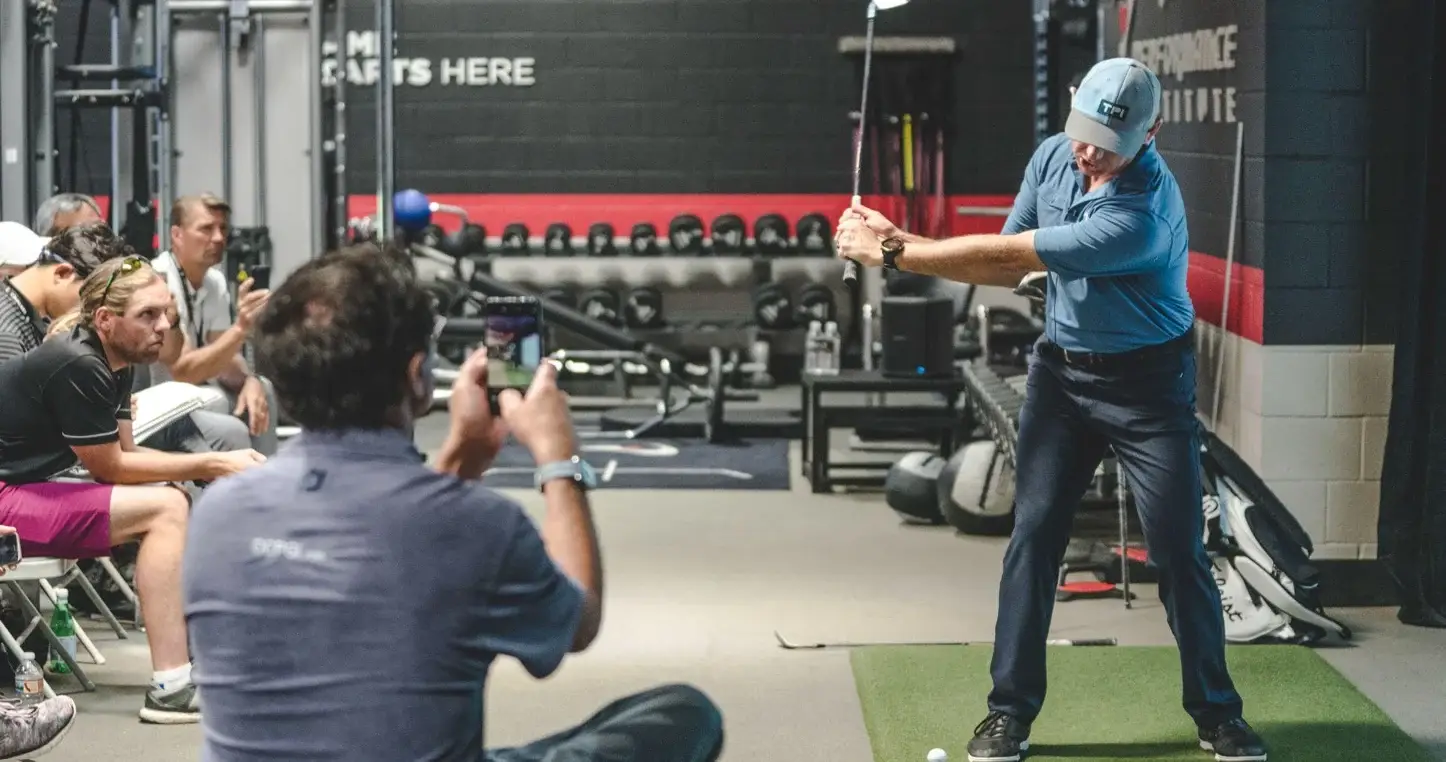
Then, check out the video below for a quick and easy golf warm-up you can do before your round. These simple movements help loosen up key areas, improve mobility, and prepare your body for the demands of the golf swing, so you can start your round feeling ready from the very first tee.
⛳ HOLES 4–12:
“Now I’m Finding My Rhythm”

This is often when golfers start feeling their best. You’ve been walking. You’ve taken several dozen swings. Your body has had time to move, your hips and trunk feel less restricted, and your swing begins to feel more natural. This is often when golfers think:
“Okay, NOW I’m warmed up.”
And that’s exactly why the middle of the round is a good reminder that getting your body moving before you tee off is important, but so is building the strength to keep it feeling good as the round goes on. Strength training helps prepare your body for the repeated demands of golf, from walking the course to swinging the club over and over again. The goal is to help you stay strong, controlled and consistent from the first tee all the way to the 18th hole
💪 Build Strength for the Whole Round
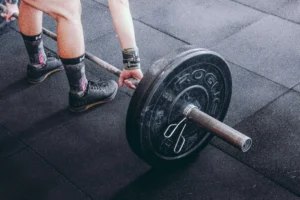
Golf isn’t just about your swing. You’re walking, standing, rotating, transferring your weight and repeatedly producing and controlling force for several hours. Your legs, hips and trunk all play an important role in helping you maintain control throughout your swing.
Building strength can help you develop the physical capacity needed to:
- Maintain your posture throughout your swing
- Control your body as you transfer weight
- Stabilize your hips and legs
- Produce and control force through your trunk
- Repeat your swing without relying on the same muscles and joints over and over
The goal isn’t simply to be stronger in the gym. It’s to build a body that can handle the demands of 18 holes.
🏋️ Want to Work on Your Golf Strength?
Looking to build a stronger golf game? Click here to read our golf strength blog and discover the most practical exercises you can add to your training routine.
⛳ HOLES 13–18:
“Can You Still Produce Power?”

Welcome to the back nine. You’ve been playing for several hours, and now the demands of the round start to add up. This is where you may notice your swing changing. Your legs might feel heavier. Your rotation may not feel quite as easy. Your balance may become less consistent. And that effortless swing you had around hole 7 might suddenly require a little more work. One thing that can change as fatigue builds is your ability to produce force quickly. And that’s where power comes in.
⚡ Power Isn’t Just About Hitting the Ball Farther

In golf, power is about your ability to produce force quickly and transfer that force through your body while maintaining control. A powerful golf swing requires more than strong muscles. It requires coordination between your lower body, hips, trunk and upper body to create and transfer force efficiently. As fatigue builds throughout a round, maintaining that ability becomes more challenging.
You may notice:
- Less speed through your swing
- Difficulty maintaining your usual tempo
- Less rotation through your finish
- Changes in balance or weight transfer
- A feeling that you’re having to work harder to generate the same result
⚡ Train Your Power — Not Just Your Strength

Strength gives you the foundation. Power teaches you to use that strength quickly. That’s why incorporating power exercises into your golf training can be an important part of preparing your body for the demands of the game. And just like strength, power is something you can train away from the golf course. Check out the video below for some golf-specific power exercises.
🚨 What If Your Problem Is Pain?

Feeling tired after 18 holes is expected. But if you consistently notice:
- Back pain after a certain number of holes
- Hip pain late in the round
- Shoulder or elbow pain after repeated swings
- Knee pain while walking
- Pain that continues after you leave the course
- Significant soreness the following morning
- A gradual decline in your ability to play
Recurring pain is worth paying attention to. Don’t wait until your game is limited to find out what’s contributing to the problem.
At Sheddon Physiotherapy and Sports Clinic in Oakville, our TPI-certified therapists Liam and Erin work with golfers to assess the physical factors that can influence their golf game, including mobility, strength, balance, movement control and previous injuries.
Whether you’re dealing with an injury, struggling with stiffness, noticing changes in your swing or simply want to improve your physical preparation for golf, a golf-focused physiotherapy assessment can help identify areas to work on.
Call today to book your assessment!!