



Hip or groin pain from skating?
Learn what the research says about hockey groin injuries, adductor strength and exercises that can help prepare you for the demands of hockey.
Groin pain is a common problem in hockey, and it can affect more than just skating. Players may notice discomfort when accelerating, changing direction, shooting, getting out of a low skating stance or pushing off one leg.
At Sheddon Physiotherapy and Sports Clinic, we help hockey players assess their symptoms, address relevant strength and movement deficits, and work progressively toward returning to the ice. Keep reading to learn more.
Why are hockey players susceptible to groin pain?
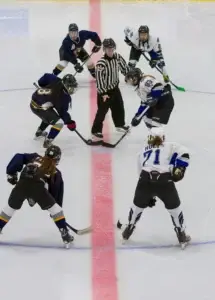
Hockey combines repeated hip movement, powerful lateral push-offs, single-leg loading and rapid changes of direction. The adductors, the muscles along the inside of the thigh, help control the leg and contribute to force production during these movements.
Groin injuries can happen for a number of reasons, including: training demands, previous injury, strength, hip mobility and the player’s ability to tolerate repeated high-intensity movements.
1. Adductor Strength Matters
Research suggests that greater hip adductor strength has been associated with a lower risk of groin injuries and pain in athletes.
What does this mean for hockey players?
Including adductor strengthening exercises into a regular gym program can help build the strength needed for powerful skating strides, quick changes of direction and improved groin injury prevention.
2. Hockey exposure can temporarily change hip strength and mobility
Studies have shown that hip adductor strength and hip rotation can decrease following hockey exposure, with some changes persisting 24 hours later. This suggests that repeated high-intensity skating and accumulated fatigue may temporarily reduce the muscles’ capacity to produce force and control movement. During tournaments, back-to-back games or the later stages of a game, players may therefore need to manage fatigue and recovery carefully to prevent injury.
What does this mean for hockey players?
Hockey players need to prepare their adductors and hips to tolerate repeated high-intensity skating, powerful lateral push-offs and rapid changes of direction as fatigue builds. Rehabilitation should progressively replicate these demands, building not only strength but also the capacity to maintain control and performance through a full game or tournament. This is particularly important when returning to consecutive games, where recovery between sessions may be limited.
3. Previous groin pain deserves attention, even when a player is back on the ice
Research has shown that players who had experienced hip or groin problems during the previous season reported worse hip and groin function and more pain during testing than players without those previous problems.
What does this mean for hockey players?
If groin pain keeps returning, it is worth reassessing strength, symptoms and sport-specific function instead of simply resting until the pain settles and resuming the same training load.
3 exercises to help prepare your hips and groin for hockey
These exercises target different aspects of adductor strength, trunk control and lateral movement. They are options for a progressive conditioning or rehabilitation program for the uninjured hockey player.
Side Steps with Adduction Resistance
Targets: Hip adductor strength, lateral hip stability, pelvic control and frontal-plane movement control.
Hockey players rely on their hip adductors to help control the leg during skating, stabilize the pelvis and manage forces during lateral movements. Banded side steps with resistance pulling the leg outward challenge the adductors to work against that force as the athlete moves laterally.
How to perform it:
- Attach a resistance band securely to a stable anchor on one side of your body and loop it around your ankle, so the band pulls your leg away from the anchor.
- Stand in an athletic stance with your feet approximately shoulder-width apart, knees slightly bent and trunk controlled.
- Step laterally toward the anchor, bringing the working leg inward against the band’s outward pull.
- Slowly move the opposite leg to follow, maintaining tension in the band and avoiding excessive trunk lean or pelvic rotation.
- Continue for several controlled steps, then turn around and repeat with the band pulling from the opposite direction.
Progression: Start with a light resistance band and short, controlled steps. Progress by increasing band resistance, stepping farther laterally or maintaining a deeper athletic stance while keeping the pelvis level and movement controlled.
Why it matters: The hip adductors contribute to controlling the leg and pelvis during skating and lateral movements. Training them against resistance can help build the strength needed to manage these demands. Include this exercise as part of a broader hockey-specific program that also develops adductor strength, trunk control and single-leg stability.
Skaters with Adduction Resistance
Targets: Hip adductor strength, eccentric control, lateral movement and pelvic stability.
Hockey players need to control their body as they push laterally, shift their weight and recover into a skating position. The slider lateral lunge challenges the adductors as the leg moves away from the body and again as the athlete actively pulls it back in.
How to perform it:
- Stand in an athletic stance with one foot placed on a slider or towel on a suitable smooth floor.
- Slowly slide that foot out to the side while bending the opposite knee and shifting your hips back.
- Keep your trunk controlled and your pelvis level as the sliding leg moves outward.
- Pause briefly, then actively draw the sliding leg back to the starting position using a controlled movement.
- Complete your repetitions on one side before switching legs.
Progression: Start with a small range of motion and slow, controlled repetitions. Gradually increase the distance of the slide, then add resistance or progress to a more dynamic lateral movement as strength and symptom tolerance improve.
Why it matters: Unlike a simple adductor squeeze, this exercise challenges the groin muscles during a functional lateral movement and during the return to the starting position. It can help develop the strength and control needed for hockey’s side-to-side demands.
Copenhagen Adduction
Target: Hip adductor strength and lateral trunk control.
The Copenhagen adduction exercise loads the inside-thigh muscles while requiring the trunk and pelvis to remain controlled.
How to perform it:
- Lie on your side beside a sturdy bench.
- Support your upper leg on the bench, using a shorter lever initially if needed.
- Lift your hips to create a straight line through your trunk and pelvis.
- Hold briefly or perform controlled repetitions, depending on the variation.
- Lower with control and repeat on the other side.
How to progress: Begin with a short-lever variation, such as supporting the knee rather than the ankle. Progress to longer-lever holds and then repetitions when the exercise is well tolerated.
Important: This can be a demanding exercise. Players with acute adductor injuries or abdominal, pubic or inguinal pain may need a different starting point.
Returning to Hockey:
The OAA Advantage
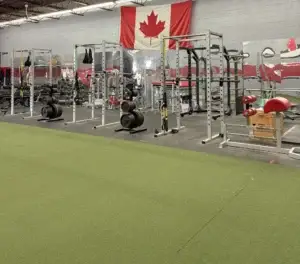
For athletes entering the later stages of groin injury rehabilitation, returning to hockey requires more than pain-free movement—it requires rebuilding the strength, power and control needed for the demands of the game.
Our Sheddon Physiotherapy and Sports Clinic location inside the Oakville Athletic Academy (OAA), offers athletes a unique environment to progress from rehabilitation to sport-specific training. We have access to a full gym and athletic training facility, helping us bridge the gap between recovering from a groin injury and preparing for the demands of hockey. As athletes progress, rehabilitation can advance beyond the treatment room to include progressively challenging strength, lateral movement, deceleration and power exercises.
Struggling with Groin Pain?
If hip or groin pain is affecting your skating, acceleration or ability to train, the team at Sheddon Physiotherapy and Sports Clinic can help assess your symptoms and develop an appropriate plan to support your return to hockey.
Book an assessment and work toward getting back on the ice with confidence.
CALL 905-849-4576
Frequently Asked Questions
What causes groin pain in hockey players?
Groin pain in hockey players can result from adductor muscle strains, repetitive loading, previous injuries or problems involving the hip joint, pubic region or abdominal and inguinal tissues. The demands of skating, accelerating and changing direction place considerable stress on the hip and groin. A physiotherapy assessment can help identify the likely source of symptoms.
What are the best exercises for hockey groin injuries?
The most appropriate exercises depend on the cause and severity of the injury. Copenhagen adduction exercises can help develop adductor strength, while lateral lunges and progressive single-leg and trunk-control exercises can help prepare athletes for the demands of skating. Exercises should be progressed according to symptoms, strength and functional ability.
Should I keep playing hockey if I have groin pain?
Continuing to play depends on the cause and severity of the pain. Persistent or worsening symptoms, pain that affects skating or difficulty accelerating warrant assessment.
How long does a hockey groin injury take to heal?
Recovery time varies according to the diagnosis, injury severity, previous symptoms and sporting demands. Some muscle strains recover relatively quickly, while persistent adductor-related pain, hip joint problems or abdominal and inguinal conditions may require a longer rehabilitation period. Return to hockey should be guided by clinical assessment and functional progress rather than time alone.
When should I see a physiotherapist for hockey groin pain?
Consider seeing a physiotherapist if groin pain persists, repeatedly returns, limits skating or affects training. An assessment can help identify relevant strength and mobility deficits, guide exercise selection and determine whether further medical evaluation is needed.
Where can I get physiotherapy for a hockey groin injury in Oakville?
Sheddon Physiotherapy and Sports Clinic provides physiotherapy to help athletes address injuries, rebuild strength and progress toward returning to sport. An individualized assessment can help determine the most appropriate rehabilitation approach for your hip or groin pain.
References
- Quintana-Cepedal, M., Vicente-Rodríguez, G., Crespo, I., & Olmedillas, H. (2025). Is hip adductor or abductor strength in healthy athletes associated with future groin pain? A systematic review and meta-analysis. British Journal of Sports Medicine, 59(7), 501–509. https://doi.org/10.1136/bjsports-2024-108836
- Suits, W. H., O’Neil, M. M., & Fogarty, K. J. (2024). Acute effects of ice hockey on hip range of motion, strength, and pelvic tilt in competitive male players. Sports Health, 16(4), 616–621. https://doi.org/10.1177/19417381231190649
- Wörner, T., Thorborg, K., Clarsen, B., & Eek, F. (2021). Hip and groin function and strength in male ice hockey players with and without hip and groin problems in the previous season—a prospective cohort study. Physical Therapy in Sport, 52, 263–271. https://doi.org/10.1016/j.ptsp.2021.10.005
- Quintana-Cepedal, M., López-Pérez, E., Del Valle, M., Crespo, I., & Olmedillas, H. (2026). The dose-response of the Copenhagen adduction exercise on prevention of groin problems in rink hockey: A prospective cohort study. Journal of Sports Sciences. Advance online publication. https://doi.org/10.1080/02640414.2026.2713905