



Soccer is much more than running up and down the field. Every game involves sprinting, sudden stops, quick changes of direction, jumping, landing, kicking and reacting to unpredictable movements.
While injuries are not always preventable, preparing your body for the physical demands of soccer can help improve strength, movement control and overall athletic performance.
So, how prepared is your body for the demands of the game?
Whether you’re a competitive youth athlete, recreational player or returning from an injury, here are five functional movements every soccer player should be able to perform with control.
1. The Single-Leg Squat:
Can You Control Your Knee?

Soccer is predominantly a single-leg sport. When you sprint, kick, jump, land or change direction, you are frequently relying on one leg to support and control your body.
How to test it: The single-leg squat is a great way to assess lower-body strength, balance and movement control.
What to look for:
-
Does the knee stay relatively aligned over the foot?
-
Does the pelvis remain level?
-
Can you control your movement without losing balance?
-
Does your knee collapse inward or does your trunk lean excessively?
Why it matters: Hip, knee and ankle strength all contribute to controlling single-leg movements. Developing strength and coordination can help prepare players for the demands of running, landing and changing direction.
2. The Single-Leg Hop and Stick:
Can You Absorb Force?

Soccer players don’t just need to jump. They need to land, stabilize and immediately prepare for their next movement. Whether coming down from a header, jumping to intercept a ball or landing after a challenge, the ability to absorb force is essential.
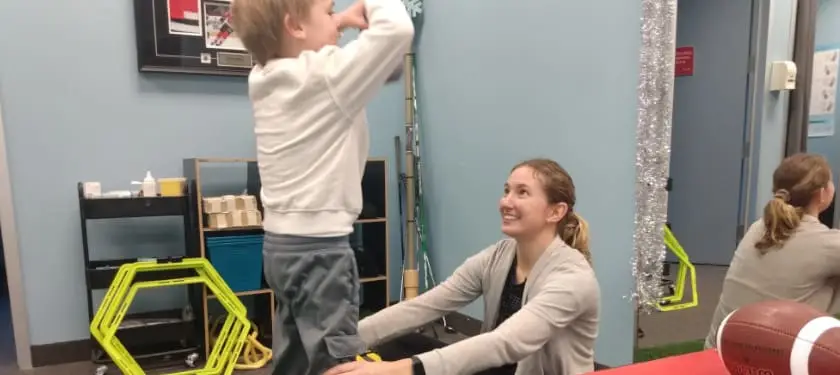
How to test it: Try hopping forward on one leg and holding the landing for two to three seconds.
What to look for:
-
Can you land quietly and maintain your balance?
-
Does your knee remain controlled rather than collapsing inward?
-
Can you maintain your landing position without excessive trunk movement?
-
Can you stabilize without immediately touching the other foot down?
Why it matters: Landing requires coordinated work from the quadriceps, hamstrings, glutes and calf muscles. Practising controlled landings helps develop the neuromuscular control needed for soccer’s repeated jumping and landing demands.
3. The Lateral Bound:
Can You Control Side-to-Side Movement?
Soccer is not just a forward-running sport. Players constantly move laterally to defend, evade opponents, create space and react to the ball. The lateral bound challenges your ability to generate force in one direction and control your body when landing on the opposite leg.
How to test it: Jump sideways from one leg to the other, landing on one foot. Hold the landing before repeating in the opposite direction.
What to look for:
-
Can you control your landing without wobbling?
-
Does your knee remain aligned with your foot?
-
Can you absorb the landing without excessive trunk lean?
-
Are you equally comfortable jumping and landing on both sides?
Why it matters: Lateral strength and control are important for defensive shuffling, cutting, tackling and changing direction. Athletes need to be able to both generate and absorb force in multiple directions.
4. The Deceleration Test:
Can You Stop as Well as You Start?

Soccer players spend a lot of time practising how to run faster, but how often do they practise slowing down? Deceleration is one of the most important and often overlooked physical demands of soccer. Players constantly need to stop quickly to defend, react to an opponent, change direction or control their position on the field.
How to test it: Sprint forward for approximately 5–10 metres, then come to a controlled stop within a few steps. Repeat several times, focusing on control rather than maximum speed.
What to look for:
-
Can you slow down without taking multiple uncontrolled steps?
-
Can you maintain your balance and control your trunk?
-
Can you stop confidently on either leg?
-
Do you lose control when stopping quickly?
Why it matters: The ability to decelerate requires strength, coordination and the capacity to absorb high forces. Players who can accelerate but struggle to slow down may have difficulty controlling their bodies during sudden changes in play.
5. The Change-of-Direction Cut:
Can You Plant, Push and Go?

This might be the most soccer-specific test of all. Think about how often a player needs to plant one foot and quickly change direction to avoid a defender, chase down an opponent or create space.
How to test it: Run towards a cone, plant one foot and cut approximately 45 degrees in a new direction. Repeat on both sides.
What to look for:
-
Can you lower your centre of gravity before changing direction?
-
Does your knee remain controlled as you plant?
-
Can you push off confidently and accelerate in the new direction?
-
Is there a noticeable difference between your left and right sides?
Why it matters: Cutting requires a combination of strength, balance, coordination, reaction time and the ability to absorb and generate force.
What if you struggle with one of these tests?
That’s not necessarily a reason to stop playing soccer. It’s an opportunity to identify areas where you could improve.
For example:
-
Difficulty with single-leg squats may highlight opportunities to improve hip and lower-body strength.
-
Poor landing control may indicate a need for more landing and plyometric training.
-
Difficulty with lateral movements may highlight limitations in lateral strength and stability.
-
Struggling to stop quickly may indicate a need to improve eccentric strength and deceleration mechanics.
-
Difficulty cutting in one direction may highlight differences in strength, coordination or movement confidence.
It’s also important to remember that these are simple functional movement challenges, not formal injury prediction tests. A physiotherapist can assess your strength, mobility, movement quality, previous injuries and sport-specific demands to develop a more individualized program.
When should a soccer player see a physiotherapist?
If you notice differences between sides, difficulty controlling landings, recurring muscle strains, knee pain or a previous injury that continues to affect your performance, a physiotherapy assessment may help identify areas that need attention.
At Sheddon Physiotherapy and Sports Clinic, we look beyond the painful area. Our goal is to assess how your body moves, identify strength and movement limitations, and help you build the physical capacity needed to return to sport and perform with confidence.
DID YOU KNOW?
Sheddon Offers Movement Testing for Teams & Athletes!
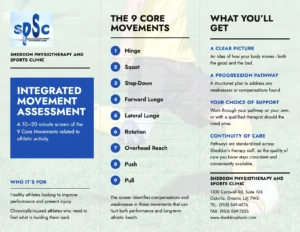
At Sheddon Physiotherapy and Sports Clinic, we work with teams and individual athletes to assess movement, identify areas for improvement, and provide recommendations to help build strength, improve performance, and reduce injury risk.
This month, we’re working with a local soccer club to assess their soccer players’. Based on our findings, we’ll provide recommendations for targeted strengthening and exercises to help athletes prepare for the demands of their sport.
Not a soccer player? No problem!
These movement skills transfer across many sports, including football, basketball, hockey and more. We also offer sport-specific assessments for activities like golf and running.
Whether you’re part of a team or an individual athlete looking to take your performance to the next level, we can help you move better, build strength, and stay in the game!
Want to find out if your body is ready for the demands of your sport?
Contact Sheddon Physiotherapy and Sports Clinic to arrange an assessment.
Frequently Asked Questions
1. What is a soccer movement assessment?
A soccer movement assessment looks at how an athlete moves during functional movements. It helps identify movement patterns, strength deficits, balance issues and areas that may benefit from targeted training.
2. Why is movement testing important for soccer players?
Soccer involves repeated sprinting, sudden stops, quick changes of direction, jumping and single-leg movements. Assessing these skills can help identify areas for improvement and guide a strengthening program designed around the physical demands of the sport.
3. What age should young athletes start movement testing?
Movement assessments can be useful for youth athletes as well as adults. Testing should be appropriate for the athlete’s age, experience, physical development and sport-specific demands.
4. Is movement testing only for soccer players?
Not at all! Many of the movement skills assessed in soccer are important across multiple sports. We offer sport-specific movement assessments for athletes participating in football, hockey, basketball, volleyball, swimming, golf, running and more.