
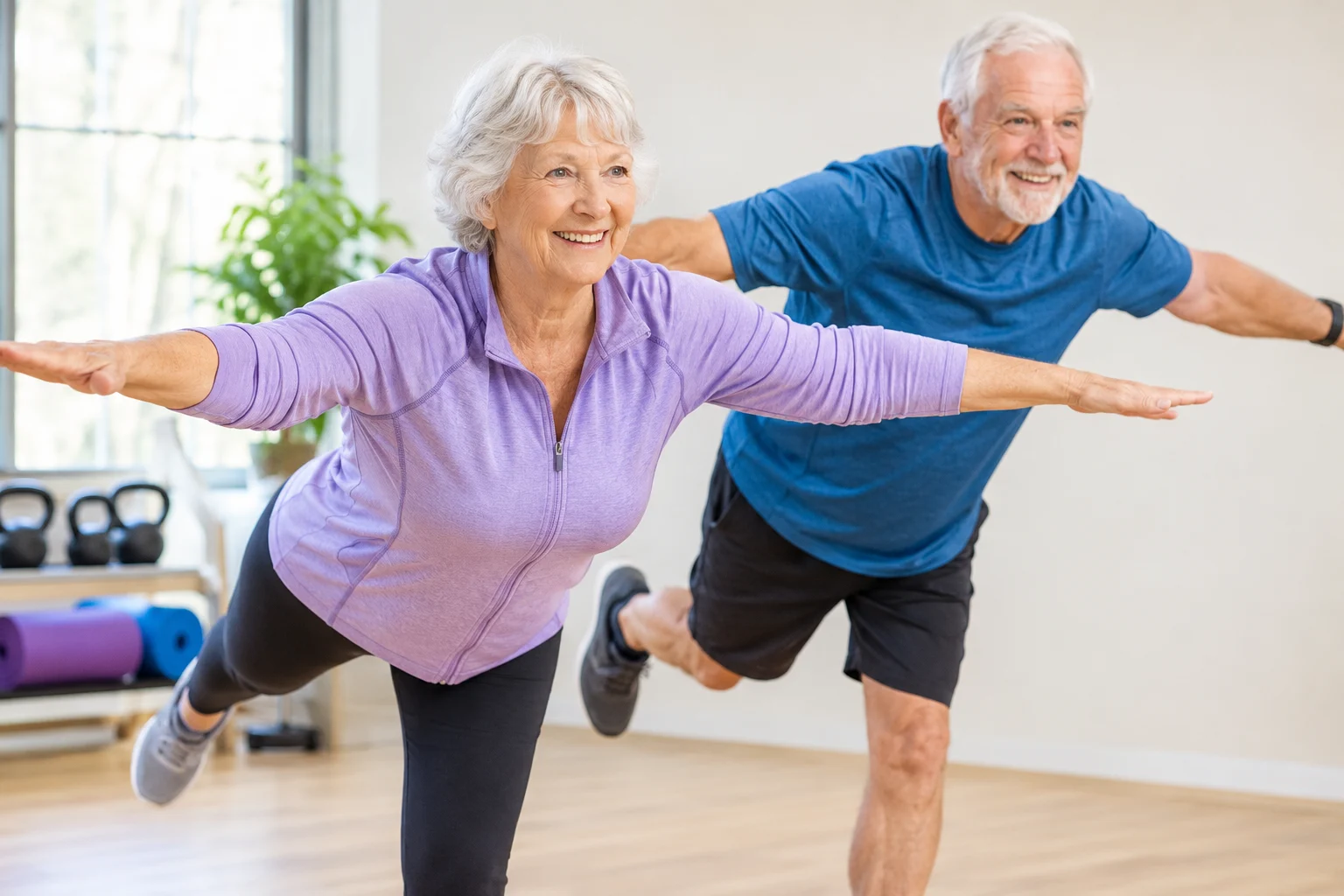



November is Osteoporosis Month and Fall Prevention Month in Canada. It’s a great reminder that staying strong isn’t just about fitness.
Think about the last time you stumbled on an uneven sidewalk, missed a step, slipped on a wet floor or had to quickly change direction to avoid bumping into someone.
Did you recover your balance easily? Did your legs have the strength to catch you? Or did you need to grab something to steady yourself?
These everyday moments are a good reminder that strength and balance are about much more than completing a workout. They’re skills we use constantly.
At Sheddon Physiotherapy and Sports Clinic in Oakville, we believe that building stronger bones and improving balance should be about preparing your body for real life, not just avoiding a fall.
Bone Health Is About More Than Calcium

Osteoporosis is a condition that causes bones to become weaker and more susceptible to fractures. Often called a silent disease, it can develop without noticeable symptoms until a fracture occurs. Although bone health becomes increasingly important as we age, it’s never too early to start building habits that support stronger bones. Exercise plays an important role in maintaining bone health. However, not all exercise provides the same benefits.
Three important components of an effective bone-health program include:
- Weight-bearing activity: Activities performed on your feet, such as walking, stair climbing and appropriately prescribed impact exercise.
- Progressive strength training: Exercises that challenge muscles and bones through resistance, helping maintain strength and physical function.
- Balance and functional training: Exercises that improve your ability to control your body, react to changes in your environment and recover your balance.
The Canadian osteoporosis clinical practice guidelines recommend balance and functional training at least twice per week, alongside progressive resistance training. Simply walking every day is beneficial, but it may not provide all the strength and balance challenges your body needs.
The Real-Life Strength Test:
Can Your Body Handle These Four Movements?
Instead of thinking about fall prevention as a list of things to avoid, think about what you want your body to be capable of doing. Here are four everyday movements worth practising. They also provide a starting point for thinking about where your strength and balance could improve.
1. Getting Up From a Chair Without Using Your Hands
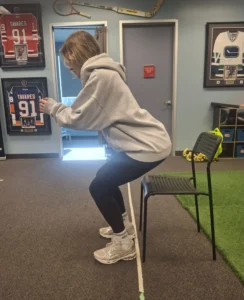
This movement requires leg strength, hip strength and coordination.
Try:
- Sit in a sturdy chair.
- Place your feet comfortably underneath your knees.
- Lean slightly forward and stand up.
- Slowly lower yourself back down.
Challenge: Can you complete 10 controlled repetitions without using your hands or dropping into the chair?
2. Standing on One Leg
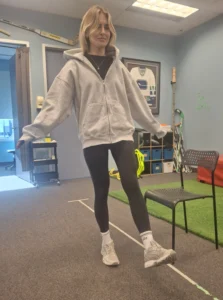
Balance isn’t just about standing still. It’s about maintaining control while your attention is elsewhere.
Try:
- Stand beside a counter for support.
- Lift one foot slightly off the floor.
- Hold for 10–20 seconds.
- Repeat on the other side.
Challenge: Can you maintain your balance while turning your head or reaching gently in different directions?
3. Stepping Up and Down With Control
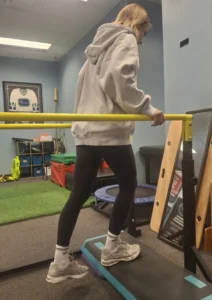
Stair climbing requires strength, coordination and the ability to control your body weight.
Try:
- Use the bottom step of a staircase or a low exercise step.
- Step up with one foot.
- Bring the other foot up.
- Slowly step back down.
- Repeat, alternating the leading leg.
Challenge: Can you complete 10 repetitions on each side without using momentum or losing control?
4. Reaching Outside Your Comfort Zone
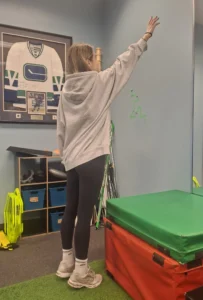
Everyday activities often require us to reach, bend slightly or shift our weight.
Try:
- Stand with your feet comfortably apart.
- Reach one arm forward, then diagonally to the side.
- Shift your weight gently while keeping your feet planted.
- Return to your starting position.
Challenge: Can you reach in different directions while maintaining steady control?
Important: These are movement ideas, not a diagnostic fall-risk test. Use a stable support nearby, and don’t attempt challenging balance exercises alone if you have a history of falls, significant unsteadiness or a high fracture risk. A physiotherapist can help determine which movements are appropriate.
Your Bone-Strength and Balance Workout:
Five Exercises to Start With
You don’t need complicated equipment or hours in the gym to begin improving your strength and balance. Here are five exercises that can be incorporated into a home or supervised exercise program.
1. Sit-to-Stand
Builds strength in the quadriceps and glutes.
- 2–3 sets of 10 repetitions.
- Progress by using a lower chair or holding a light weight if appropriate.
2. Step-Ups
Develops lower-body strength and functional stair-climbing ability.
- 2 sets of 10 repetitions per leg.
- Start with a low step and progress gradually.
3. Standing Heel Raises
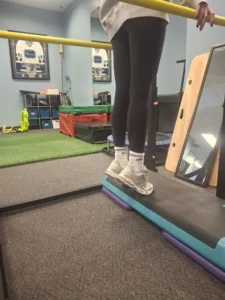
Strengthens the calf muscles and challenges standing balance.
- 2–3 sets of 12–15 repetitions.
- Hold a counter for support if needed.
4. Standing Hip Abduction
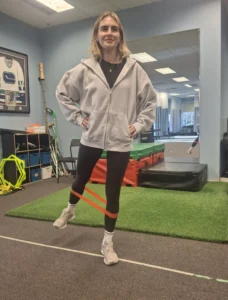
Targets the gluteal muscles, which help stabilize the pelvis during walking and single-leg activities.
- 2 sets of 10–12 repetitions per leg.
- Keep your trunk upright and avoid leaning.
5. Tandem Walking

Improves balance and coordination.
- Walk heel-to-toe along a clear pathway.
- Complete 2–3 passes.
- Use a wall or counter nearby for support.
Already Have Osteoporosis? You Can Still Exercise.
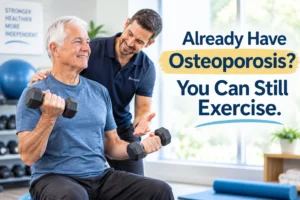
An osteoporosis diagnosis does not mean you should stop exercising. In fact, appropriately selected exercise is an important part of managing osteoporosis, maintaining strength and supporting independence. However, the right program depends on your bone health, fracture history, fitness level and individual needs. Some people may benefit from progressive resistance training and weight-bearing activity, while others may need modifications to their exercises.
For individuals with osteoporosis, particularly those with a history of spinal fractures or high fracture risk, certain movements involving repeated, loaded or end-range spinal bending and twisting may need modification. High-impact exercise and jumping are not appropriate for everyone. This is where an individualized physiotherapy program can make a difference.
When Should You Consider a Physiotherapy Assessment?
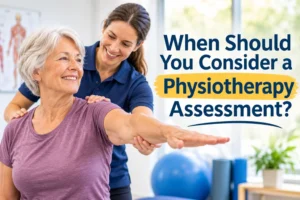
You don’t need to wait until you’ve experienced a fall or sustained a fracture to start improving your strength, balance and bone health. If you have osteopenia or osteoporosis, a physiotherapy assessment can help you understand your current abilities, identify areas that need improvement and develop a safe, individualized exercise program to help protect your bones and reduce your risk of falling.
At Sheddon Physiotherapy, Beth is Bone Fit® certified, meaning she has completed specialized training in exercise prescription for individuals living with osteoporosis and those at risk of fractures. This training helps her tailor exercise programs to address bone health, improve strength and balance, and promote safe movement while considering the specific precautions associated with osteoporosis.
Consider booking an assessment if you:
-
Have been diagnosed with osteopenia or osteoporosis.
-
Have experienced a previous fracture, particularly a spinal or hip fracture.
-
Feel less steady when walking, climbing stairs or changing direction.
-
Have noticed reduced leg strength, balance or endurance.
-
Avoid certain activities because you’re worried about falling or fracturing a bone.
-
Have experienced a recent fall or repeated near-falls.
-
Want to remain active but aren’t sure which exercises are appropriate or safe for your bone health.
What does a Bone Fit® physiotherapy assessment involve?
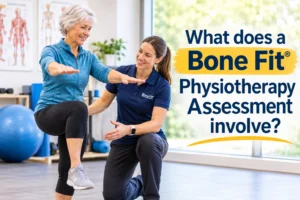
Beth can assess several areas that are important for maintaining independence and reducing fracture risk, including:
-
Strength: Lower-body, hip, back extensor and postural muscle strength.
-
Balance: Static and dynamic balance, single-leg stability and ability to recover from a loss of balance.
-
Mobility and movement: Walking, stair climbing, transfers and functional movement patterns.
-
Posture: Spinal alignment, postural strength and movement strategies that help protect the spine.
-
Fall risk: Identifying movement difficulties, balance limitations and other factors that may increase the likelihood of falling.
Based on the findings, Beth can develop an individualized exercise program incorporating appropriate resistance training, weight-bearing activity, balance exercises and functional movement training. The goal is to help you build stronger bones and muscles, improve confidence with everyday activities and maintain an active, independent lifestyle.
Ready to Work on Your Strength and Balance?
The team at Sheddon Physiotherapy and Sports Clinic in Oakville can help you develop an individualized exercise program to support bone health, improve balance and maintain the activities you love.
Contact Sheddon to book an assessment and start building a stronger foundation for everyday life.
Frequently Asked Questions About Osteoporosis and Fall Prevention
1. What are the best exercises for osteoporosis?
The best exercises for osteoporosis are those that help maintain bone strength, improve muscle strength and reduce the risk of falls. A well-rounded program typically includes progressive resistance training, weight-bearing activity and balance exercises.
Examples include:
- Squats and sit-to-stands to strengthen the legs and hips.
- Step-ups to improve lower-body strength and functional mobility.
- Resistance exercises for the back, shoulders and arms.
- Standing heel raises to strengthen the calves.
- Balance exercises such as tandem walking and supported single-leg standing.
The right exercises depend on your bone density, fracture history, fitness level and overall health. A physiotherapist can help develop a safe, progressive exercise program suited to your needs.
2. Can physiotherapy help prevent falls?
Yes! Physiotherapy can play an important role in fall prevention by identifying movement and strength limitations that may increase your risk of falling.
A physiotherapy assessment may include evaluating:
- Leg and hip strength.
- Balance and coordination.
- Walking patterns and mobility.
- Posture and functional movement.
- Confidence with everyday activities.
Based on the assessment, your physiotherapist can develop an individualized program that focuses on improving strength, balance, coordination and your ability to respond to unexpected movements.
Fall prevention is not just about avoiding hazards. It’s also about improving your body’s ability to handle them.
3. Is walking enough to strengthen bones?
Walking is an excellent activity for cardiovascular health, general fitness and maintaining mobility. It is also a weight-bearing activity that provides some stimulus to the bones in your legs and hips.
However, walking alone is generally not enough to provide all the exercise stimulus needed to maintain bone strength, particularly if you have osteoporosis.
A more complete bone-health program should also include:
- Progressive resistance training.
- Appropriate weight-bearing exercise.
- Balance and functional movement