




Rhabdomyolysis:
A rare but serious condition that every runner should know about
On November 1, 2026, a 24-year-old runner collapsed just two miles from the finish line of the New York City Marathon. Despite receiving immediate medical attention, she tragically passed away later that evening. Her family reported that doctors attributed her death to rhabdomyolysis (commonly known as “rhabdo”), a rare but potentially life-threatening condition involving the breakdown of muscle tissue.
While rhabdomyolysis is uncommon, it is an important condition for runners and endurance athletes to understand. It can occur when muscles are pushed beyond their ability to recover, particularly during intense exercise, sudden increases in training volume or a return to strenuous activity after a break.
So, what exactly is rhabdomyolysis, what puts runners at risk, and are there warning signs athletes should never ignore?
What Is Rhabdomyolysis?
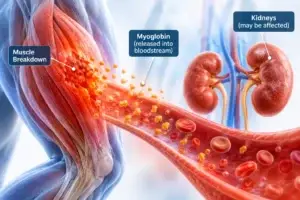
Rhabdomyolysis occurs when muscle tissue breaks down rapidly, releasing proteins and other substances into the bloodstream. One of these proteins, called myoglobin, can accumulate and potentially damage the kidneys. In severe cases, rhabdomyolysis can lead to acute kidney injury and dangerous electrolyte imbalances. Although it is uncommon, it is a medical emergency that requires prompt assessment and treatment.
Why Are Runners At Risk?

Exercise-related rhabdomyolysis can occur when the physical demands placed on the muscles exceed their ability to recover. Certain training circumstances can increase the risk, including:
- Sudden increases in mileage: Increasing weekly distance or training intensity too quickly can place excessive stress on muscles.
- Long-distance events: Marathons, ultramarathons and prolonged training sessions place significant demands on the muscular system.
- Downhill running: Downhill running involves increased eccentric muscle contractions, which can contribute to muscle damage.
- Hot weather: Exercising in high temperatures can increase the risk of dehydration and heat-related complications.
- Returning after a break: Resuming intense training without allowing your body time to readapt can increase the risk of excessive muscle damage.
These factors do not automatically cause rhabdomyolysis, but they are important considerations when planning your training.
Signs And Symptoms:
What Should You Look Out For?

It is important to recognize the warning signs, particularly following an unusually demanding workout or endurance event. Symptoms can include:
- Significant muscle swelling: Muscles that feel unusually swollen, tight or tender.
- Severe muscle pain: Pain that seems disproportionate to the workout you completed.
- Unusual muscle weakness: Difficulty performing movements that would normally feel manageable.
- Dark-coloured urine: Urine that appears tea-coloured or cola-coloured.
- Reduced urine output: Producing significantly less urine than usual.
Normal Muscle Soreness Vs. Rhabdomyolysis
After a challenging workout, experiencing muscle soreness is normal. Delayed Onset Muscle Soreness (DOMS) commonly develops following unfamiliar or intense exercise. However, it is important to understand the difference between expected post-exercise soreness and symptoms that may indicate something more serious.
| Normal DOMS | Rhabdomyolysis |
| Usually develops 12–24 hours after exercise | Can develop hours to days after exercise |
| Muscle soreness and stiffness | Often disproportionate muscle pain |
| Typically improves within 3–5 days | Symptoms can progressively worsen |
| Usually resolves with relative rest and recovery | Can cause kidney injury and electrolyte disturbances |
| Managed with relative rest and gradual return to activity | Requires urgent medical assessment |
The key takeaway: Muscle soreness after exercise is common, but severe pain, significant swelling, unusual weakness or dark urine should never be dismissed as ordinary post-workout soreness.
How Can Runners Reduce Their Risk?

Although exercise-related rhabdomyolysis cannot always be prevented, sensible training and recovery habits can help reduce unnecessary muscle stress. Consider the following:
- Progress gradually: Avoid sudden increases in weekly mileage, training intensity or duration.
- Allow adequate recovery: Incorporate rest days and appropriate recovery between demanding sessions.
- Stay hydrated: Pay attention to fluid intake, particularly during prolonged exercise and hot weather.
- Listen to your body: Do not push through severe or unusual muscle pain, swelling or weakness.
- Return to training progressively: Following time away from exercise, give your body time to rebuild its tolerance to training demands.
When Should You Seek Help?

If you experience unusual muscle pain, significant swelling or weakness following exercise, do not ignore the symptoms.
Suspect rhabdomyolysis?
Seek immediate medical assessment at an emergency department. Rhabdomyolysis requires medical investigation and may need urgent treatment. Do not wait for symptoms to worsen or assume that rest alone will resolve the problem.
Experiencing An Exercise-Related Injury?
Our physiotherapy team can help assess your movement, manage musculoskeletal injuries and develop an individualized plan to help you return to the activities you enjoy.
We’re here to help you keep moving!
At Sheddon Physiotherapy & Sports Clinic, we work with runners and athletes of all abilities to help them stay active, manage injuries and achieve their goals. Whether you’re preparing for your first 5K, training for a marathon or simply looking to stay active, we’re here to support you.
Contact Sheddon Physiotherapy & Sports Clinic
📍 1300 Cornwall Road, Unit 103, Oakville, ON
📞 905-849-4576
Stay active. Train smart. Listen to your body.
This newsletter is intended for educational purposes and is not a substitute for medical assessment or treatment.