




Returning to sport after an injury can feel like the finish line, but in reality, it’s one of the most important phases of recovery. A safe and effective return doesn’t just focus on getting you back quickly, it ensures you return strong, confident, and ready to perform.
At Sheddon Physiotherapy and Sports Clinic, we use evidence-based return-to-sport (RTS) principles to guide athletes through every stage of recovery while minimizing the risk of reinjury.
Return to Sport Is a Process, Not a Single Decision
According to the American College of Sports Medicine (ACSM) and recent team physician consensus statements, return to sport should be viewed as a continuum rather than a one-time clearance.
This continuum includes:
- Return to participation – gradual reintroduction to activity
- Return to sport – full practice or gameplay
- Return to performance – achieving pre-injury level or better
Progression through these stages requires ongoing assessment, communication, and shared decision-making between the athlete and their healthcare team.
Why a Criteria-Based Approach Matters
One of the most important principles for Return to Sport is that time alone does not determine readiness.
Instead, safe return-to-sport decisions should be based on:
- Physical recovery and tissue healing
- Strength and movement quality
- Functional performance
- Psychological readiness
Returning too soon significantly increases the risk of reinjury and long-term complications. On the other hand, delaying return unnecessarily can lead to deconditioning, reduced performance, and frustration.
A well-designed plan balances both, ensuring athletes return at the right time, not just the earliest time.
The Sheddon Advantage:
Bridging Rehab and Performance at OAA

One of the biggest gaps in recovery is transitioning from clinic-based rehab to real sport performance.
At our clinic, within Oakville Athletic Academy (OAA), we provide athletes with access to an environment that bridges that gap.
At our OAA location, athletes benefit from:
- Full gym and turf space for progressive, sport-like training
- Integration of strength and conditioning with rehabilitation
- The ability to practice cutting, sprinting, and change of direction safely
- A structured transition from rehab → performance → competition
This allows us to go beyond basic recovery and ensure athletes are truly prepared for the demands of their sport, not just symptom-free.
Key Components of a Safe Return-to-Sport Plan

1. Physical Readiness
Athletes must demonstrate:
- Adequate strength and side-to-side symmetry
- Full mobility and flexibility
- Endurance appropriate for their sport
2. Functional Performance
Before returning to sport, athletes should be able to safely perform:
- Jumping and landing
- Acceleration and deceleration
- Cutting and change of direction
These movements reflect the real demands placed on the body during sport.
3. Psychological Readiness
Confidence is a critical, and often overlooked part of recovery.
Athletes must feel:
- Comfortable loading the injured area
- Confident in their movement
- Mentally ready to return to play
4. Load Management
A gradual increase in:
- Intensity
- Volume
- Frequency
…allows the body to adapt safely and reduces the risk of overload or reinjury.
Common Challenges During Return to Sport

Even with a structured plan, setbacks can happen. The most common include:
Returning Too Soon
This is one of the leading causes of reinjury. Athletes who return before meeting objective criteria are at significantly higher risk of setbacks.
Pain or Setbacks During Progression
An increase in pain, swelling, or reduced function during progression is often a sign that the body is not ready for the current level.
In these cases, a temporary step back in the program allows for continued progress without overloading the system.
Prolonged Recovery
Recovery timelines vary between individuals and can be influenced by:
- Severity of injury
- Previous injury history
- Training load and recovery balance
Delaying Return Too Long
While caution is important, excessive delay can lead to:
- Loss of conditioning
- Reduced performance capacity
- Decreased confidence
ACL and Ankle Injuries:
Why Proper Progression Matters
ACL Reconstruction
Returning to sport after ACL surgery requires a structured, criteria-based progression.
Key factors include:
- Quadriceps and hamstring strength
- Limb symmetry
- High-level functional testing (jumping, landing, agility)
Research shows that each additional month of rehabilitation before returning to training can significantly reduce the risk of reinjury, reinforcing the importance of not rushing this process.
Return-to-Sport Testing After ACL Injury
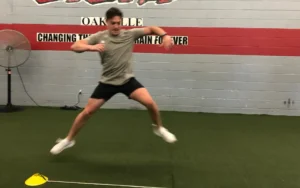
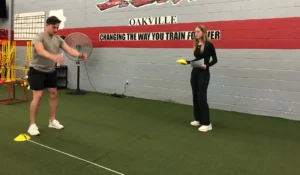
Before returning to sport after an ACL injury or reconstruction, we complete a full return-to-sport testing battery. This helps make sure your knee is strong, stable, and ready for the demands of cutting, jumping, sprinting, and contact.
1. Strength Testing
We check if your injured leg is strong enough compared to your healthy leg.
Common tests include:
- Quad strength
- Hamstring strength
- Glute strength and control
Goal:
- ≥90–95% symmetry between legs
2. Hop Testing Battery
This is one of the most important parts of RTS testing.
You’ll complete a series of hops:
- Single hop for distance
- Triple hop for distance
- Crossover hop
We compare left vs right leg performance.
Goal:
- ≥90% symmetry + good landing control
3. Movement Quality Assessment
We look at how you move, not just how far or fast you go.
We assess:
- Single-leg squat control
- Landing mechanics (jumping + landing)
- Knee alignment (no inward collapse)
- Hip and trunk control
- Balance under load
Goal:
- Stable, controlled movement with no compensation patterns
4. Running + Agility Testing
We progress into sport-like movements:
- Straight-line sprinting
- Acceleration and deceleration
- Cutting and change of direction
- Reactive agility drills
Goal:
- No pain, swelling, or instability during or after
- Confident movement at full speed
5. Final Clearance Criteria
You are typically cleared when ALL of the following are met:
- ≥90–95% strength symmetry
- ≥90% hop test symmetry
- Good movement mechanics
- Full sport-specific training tolerance
- No swelling or pain after loading
- Psychological readiness confirmed
- Clinical clearance from rehab team/physician
Return-to-Sport Testing After Ankle Injury

The ankle plays a crucial role in stability and force transfer.
Rehabilitation should focus on:
- Balance and proprioception
- Strength through full range of motion
- Dynamic control during movement
Without proper rehab, athletes are at higher risk for chronic instability and recurrent injury.
1. Strength Testing
We compare the injured ankle/leg to the other side.
We assess:
- Calf strength (single-leg heel raises)
- Peroneal strength (lateral ankle stability muscles)
- Tibialis posterior/anterior control
- Overall lower limb strength (hip + knee contribution)
Goal:
- ≥90% strength symmetry
- Ability to complete:
- 25–30 single-leg heel raises with good form (minimum benchmark in many cases)
2. Balance & Proprioception Testing
We test how well your ankle controls position and stability.
Common tests:
- Single-leg balance (eyes open/closed)
- Balance on unstable surfaces (foam, BOSU)
- Star Excursion / Y-Balance Test
- Dynamic balance (reaching while balancing)
Goal:
- Stable single-leg control with minimal wobble or compensation
- ≥90% symmetry on Y-Balance type testing
3. Hop Testing Battery
We test power, landing control, and symmetry.
Typical tests:
- Single-leg hop for distance
- Triple hop
- Crossover hop
- Side-to-side hops (lateral stability focus)
Goal:
- ≥90% limb symmetry
- Clean landings (no ankle rolling inward/outward)
4. Movement Quality Assessment
We look at how the ankle behaves during dynamic movement.
We assess:
- Jumping and landing mechanics
- Knee-to-foot alignment (avoiding collapse or excessive outward roll)
- Control during cutting and pivoting
- Foot placement and shock absorption
Goal:
- Controlled, stable landings without hesitation or compensation
5. Agility & Sport-Specific Testing
We progress into real sport movement.
Includes:
- Sprinting (straight-line)
- Deceleration drills
- Cutting and change of direction
- Figure-8 and shuttle runs
- Sport-specific drills (soccer, basketball, etc.)
Goal:
- Full-speed movement without pain, instability, or “giving way”
6. Final Clearance Criteria
Athletes are typically cleared when ALL are met:
- ≥90% strength symmetry
- ≥90% hop test symmetry
- Good balance and proprioception
- Full agility and sport-specific tolerance
- No swelling, pain, or instability after loading
- Confidence in sport movements
- Clinician clearance
Why Individualized Care Is Essential
Consensus guidelines emphasize that return-to-sport decisions must be individualized.
Key considerations include:
- Sport-specific demands
- Position and level of play
- Athlete goals
- Response to rehabilitation
At Sheddon Physiotherapy and Sports Clinic, we take a team-based approach, working closely with athletes, coaches, and families to ensure safe and effective progression.
Ready to Return to Sport Safely?

Recovering from an injury doesn’t end when the pain goes away, it ends when you’re fully prepared to return with confidence and perform at your best.
At Sheddon Physiotherapy and Sports Clinic, we offer:
- Comprehensive injury assessments
- Personalized rehabilitation programs
- Strength and conditioning integration
- Return-to-sport testing and progression
- Access to advanced training with our Physiotherapists at Oakville Athletic Academy
👉 Book an assessment today and let our team guide you back to sport safely, effectively, and stronger than before.
Call (905) 849-4576
References
- Herring SA, Putukian M, Kibler WB, et al. (2024). Team Physician Consensus Statement: Return to Sport/Return to Play (2023 Update). Medicine & Science in Sports & Exercise.
- American College of Sports Medicine (2022). The Team Physician and Return-to-Play Issues: A Consensus Statement.